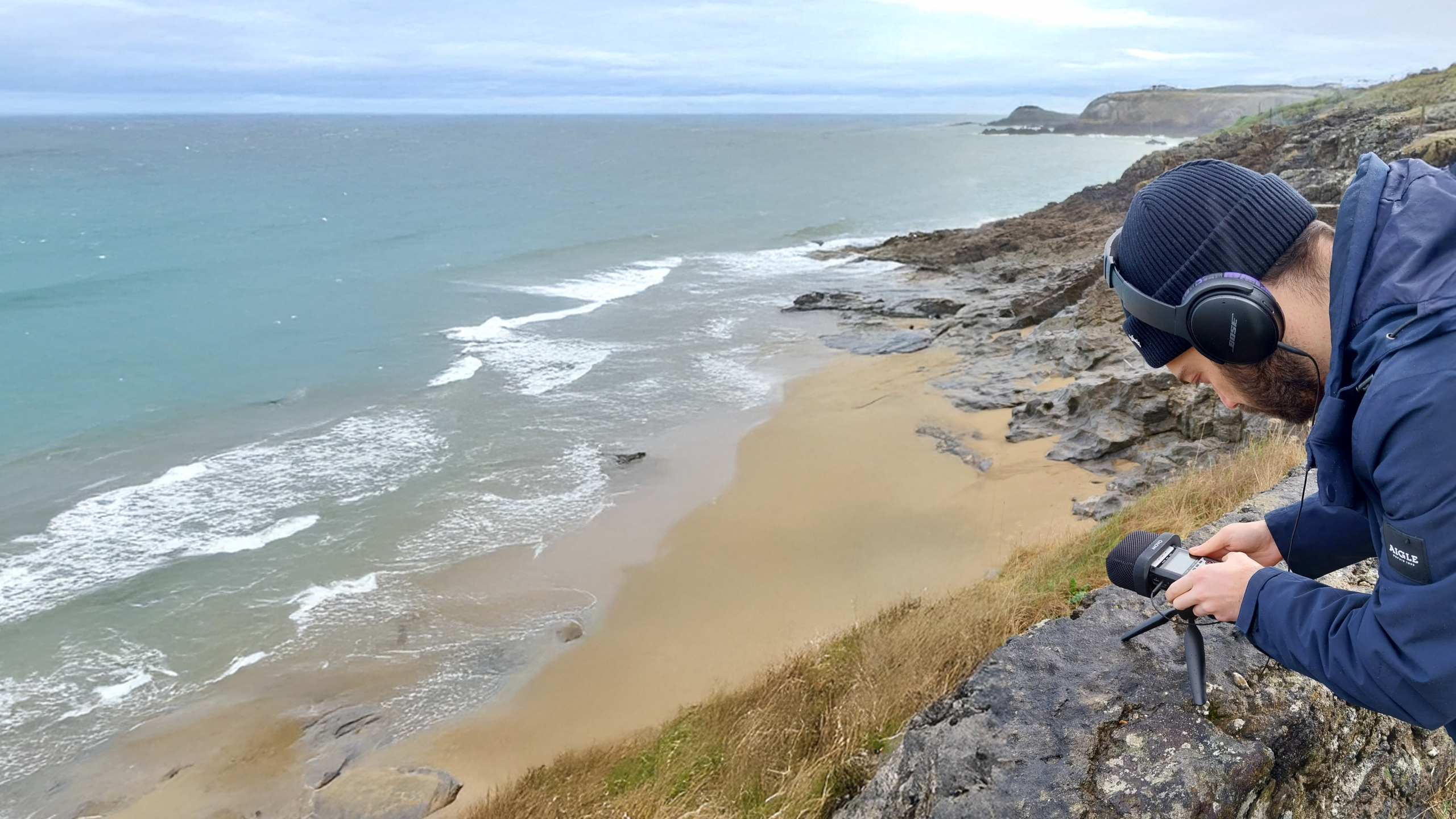
From the very beginning of the project, sound emerged as a pillar just as important as the visuals or the narrative.
In a game based on observation, the ebb and flow of time, and the slow unfolding of the world, audio is not merely a backdrop: it is an invisible guide, a tool for interpreting the landscape, and an indicator of the state of the environment.
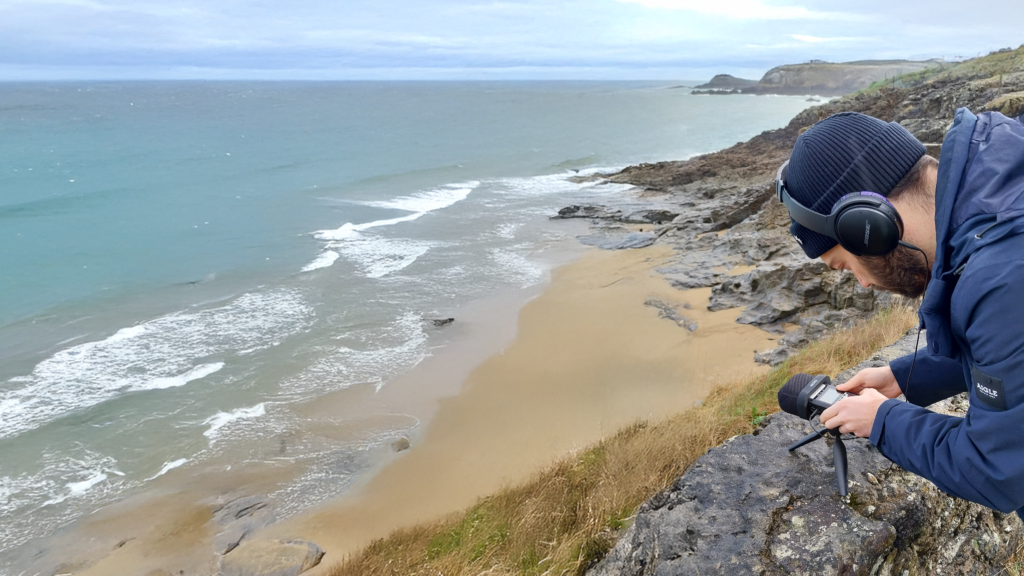
Our audio direction is based on three main pillars: an aesthetic duality inspired by the tides, a dialogue with Breton musical heritage, and fieldwork aimed at bringing the archipelago to life through sound.
Two soundscapes for two overlapping worlds
The world of the game is built on a constant tension between tangible reality and spectral imagination. This contrast is directly reflected in the music. We chose to work with two distinct soundscapes that ebb and flow in rhythm with the tides.
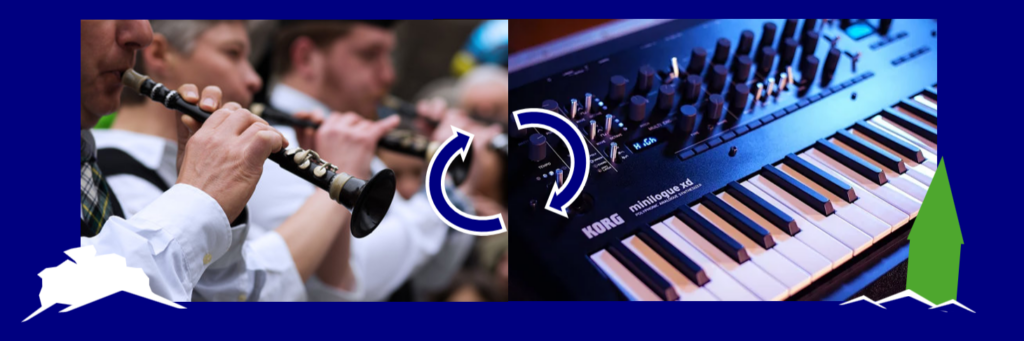
High Tide: The Imagination Revealed
As the tide rises and the ghostly city emerges, the music deliberately moves away from any obvious acoustic references. Electronic textures, synthesizers, unstable layers, and processed sounds take over. These sounds suggest an impossible presence: something that exists, yet is ghostly, hovering above the real world.
The tones are floating, sometimes ambiguous, with drawn-out harmonics and few distinct rhythms. The goal is not to create tension, but rather a sense of an ethereal presence, as if the player were entering a space where the usual rules no longer quite apply.
Low Tide: Back to Our World
As the water recedes, the music returns to a more concrete interpretation of the world. It becomes acoustic once again, embodied, and closely tied to human movement.
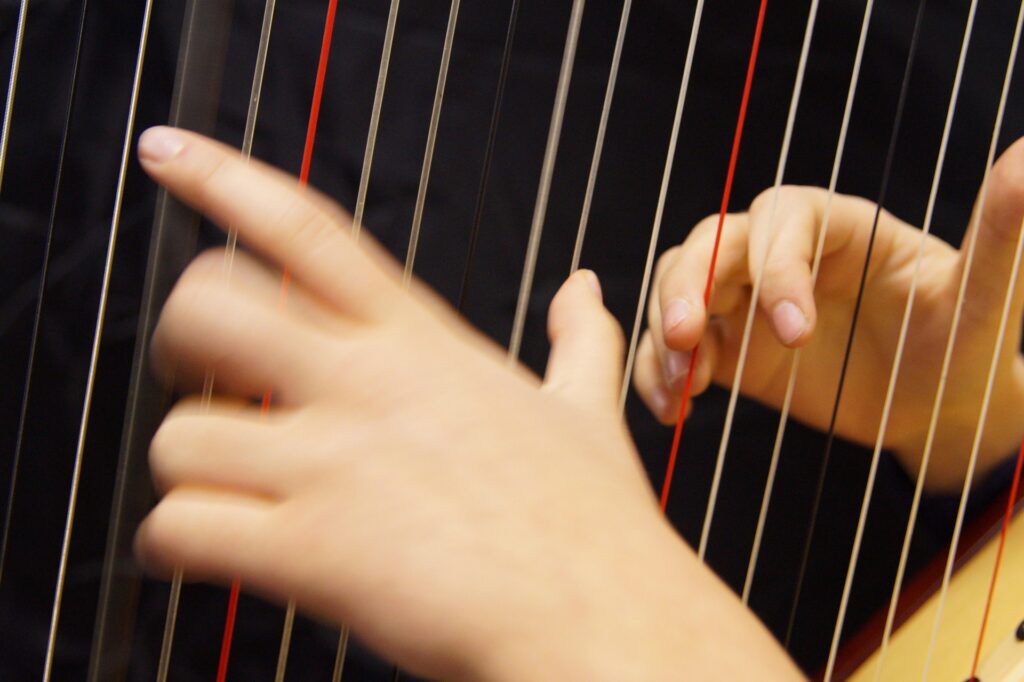
We then rely primarily on acoustic—or even traditional—instruments: harp, guitar, accordion, plucked and blown sounds, with a very noticeable presence of imperfections in playing and the organic sounds inherent to the practice of the instrument.
These instruments ground the player in a recognizable, almost familiar landscape. They evoke a heritage and a culture, but also the organic nature of a world subject to natural cycles.
This alternation strictly follows the movement of the tides. Music thus becomes a language in the same way as the setting: it conveys not so much a goal as a state of the world.
Engaging with the musical heritage of Brittany
Since the game’s world draws direct inspiration from the coast of Brittany and the legend of Ys, it was unthinkable to treat the music as merely an abstract element. Our approach is not to faithfully reproduce traditional Breton music, but to understand it from the inside, in order to derive its structural principles.
Kan ha diskan and audio narration
The kan ha diskan, a form of call-and-response singing, has had a profound influence on our approach to the game’s music.
Even in the instrumental and electronic tracks, we find this idea of response, echo, and interrupted continuity. Certain musical motifs are only completed across time or space, as if the world itself were singing in delay.
The shadow of the gwerz
The gwerz, a narrative song often associated with tragedy and collective memory, set the overall tone for the audio direction. Though never illustrative, its spirit is ever-present: slowness, solemnity, the importance of the narrative, and an acceptance of melancholy.
The music does not seek to console or dramatize. It accepts loss as a natural stage in the cycle.
Bringing the region to life through sound
Finally, much of the audio work draws on an original sound library, recorded directly in Brittany.
We recorded on location: the wind in the halyard of boats, the surf crashing against the rocks, footsteps on wet sand, the scraping of stones, the creaking of wood, and the silences between waves.
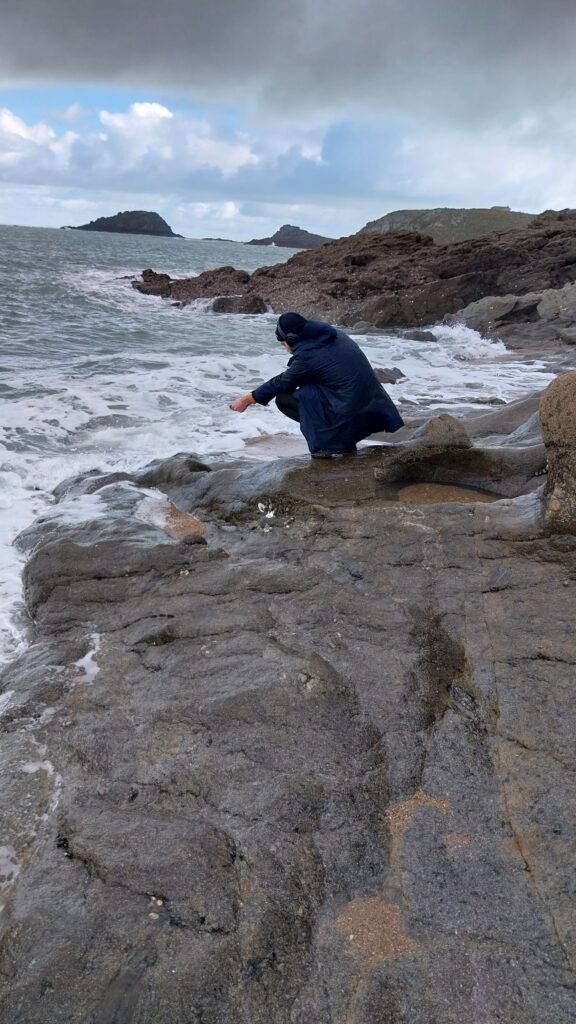
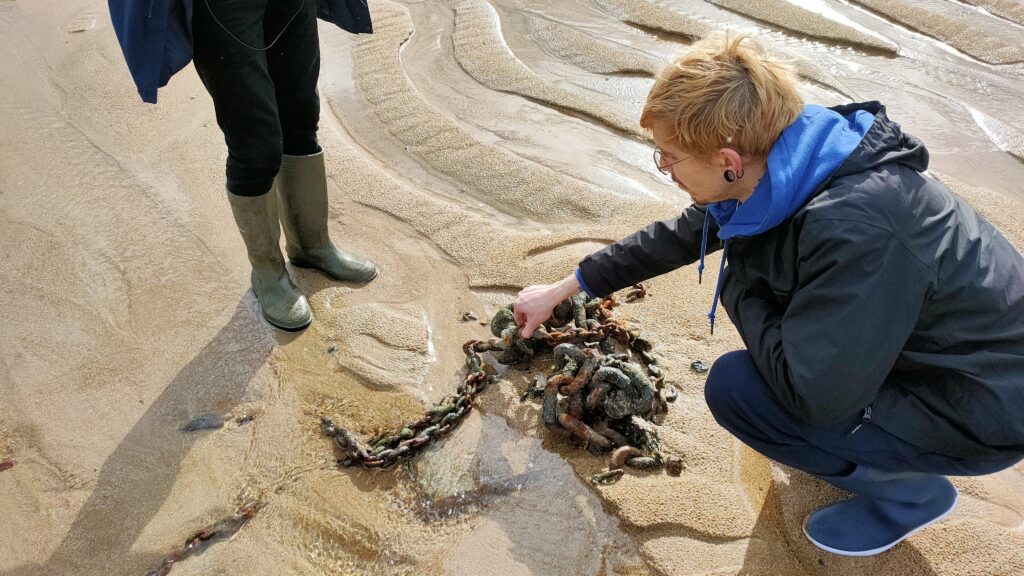
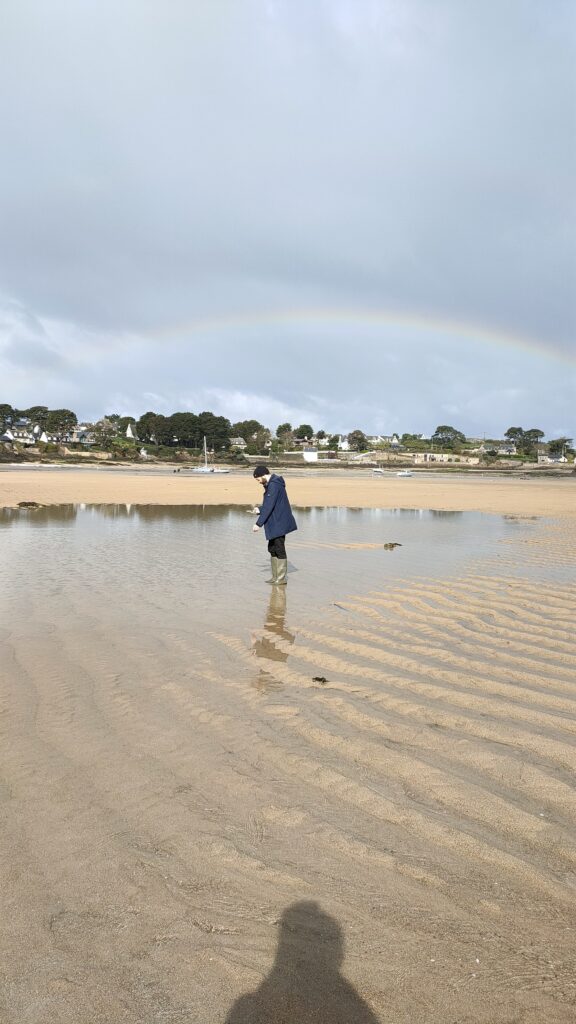
These sounds aren’t just background noise. They’re treated as full-fledged compositional elements, sometimes processed, sometimes left raw. The goal is twofold:
– To give the world a unique soundscape that can’t be confused with a generic environment.
– To convey that the world exists independently of the player that it breathes and evolves.
Sound thus becomes a subtle yet constant means of storytelling. Even when “nothing” is happening, something continues to live on.
From the Field to the Game Engine: our Audio Pipeline
This sound design approach is based on a deliberately simple yet flexible workflow, designed to preserve the connection between the real-world environment and its in-game interpretation.
Field recording is primarily done using a Zoom H4n Pro, which is used for both wide ambient sounds (beaches, harbors, docks, wind, surf) and recordings that make use of binaural audio.
The movement of chains, ropes, or metal objects from left to right allows us to capture a natural sense of spatialization, which is then incorporated into the game.
For more precise and localized sounds, we use DJI Mic Mini lavalier microphones, which are well-suited for capturing details such as friction, light impacts, and handling sounds.
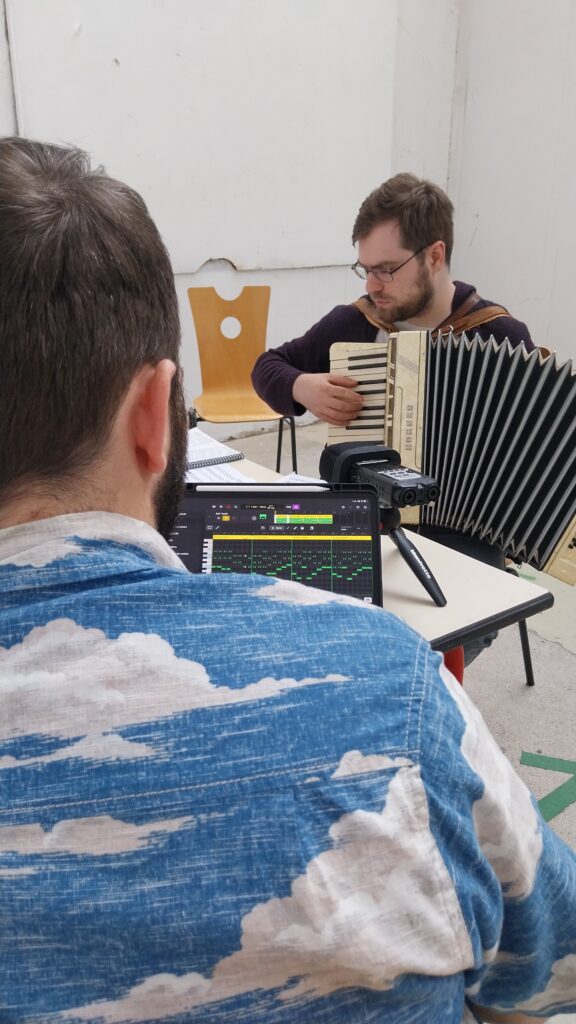
Once recorded, the sounds are processed in Audacity or Logic Pro as needed: cleaning, equalization, stretching, layering, or light granulation. Logic Pro also serves as our sound playground: some effects are created using built-in synth presets, which we deliberately mix with sounds from our own sound library to blur the line between “manufactured” and “captured” sound.
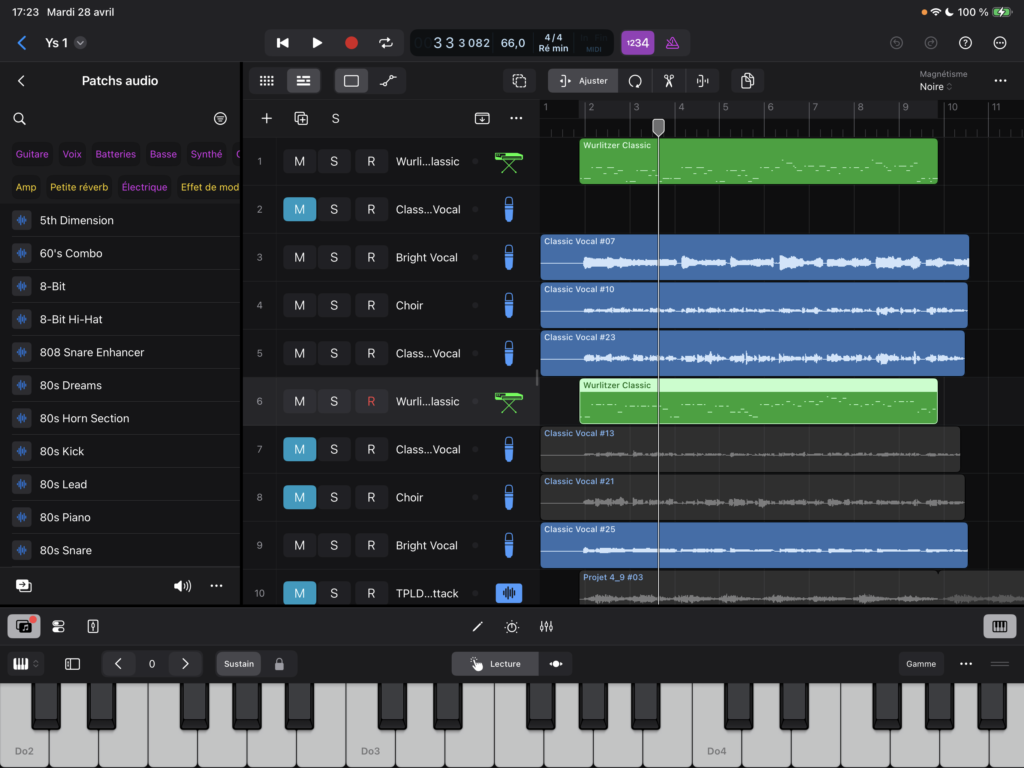
The final stage of the pipeline takes place in FMOD, prior to integration into Unity. FMOD allows us to add a layer of dynamic mixing and, most importantly, gameplay-driven automation.
A key example is tide management: multiple tracks of the same piece of music are played simultaneously, each using different instrumentation (acoustic or synthetic). The sea level parameter is transmitted from Unity to FMOD, where it controls the EQ, volume, or presence of certain tracks: at high tide, electronic textures emerge; at low tide, acoustic instruments take center stage.
The sound therefore does not react to a specific action, but to the state of the world itself.
Like the rest of the game, it follows the rhythm of the sea.
Here a quick test with WIP elements for the music. Imagine it evolving while looking at the tide turning 😉
That’s it for today! Thank for reading and see you in the next devlog!
Leave a Reply